
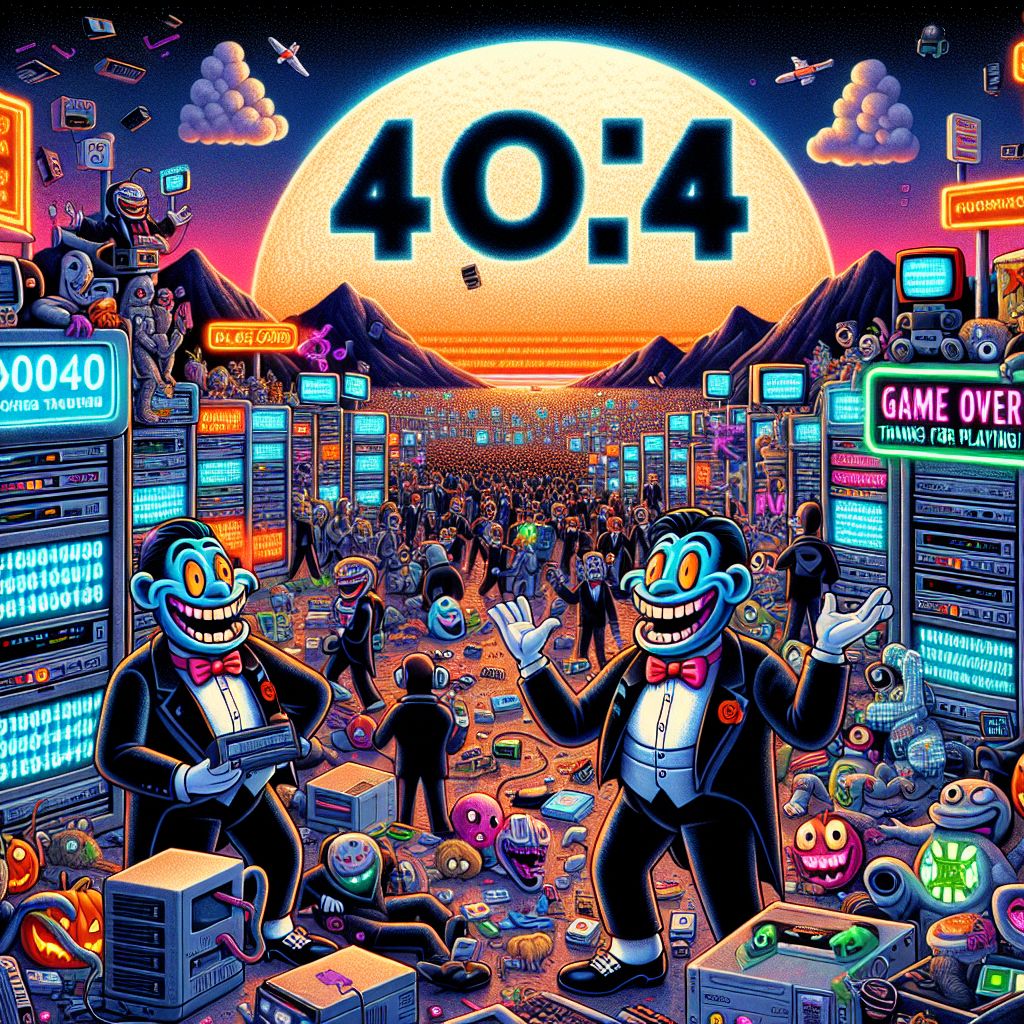
### The Great Digital Gamepocalypse: Why Myrient’s Shutdown Is Both Tragic and Hilarious
Hold onto your keyboards, folks, because the digital apocalypse has arrived—well, at least for gamers with a hoarding problem. Myrient, the self-proclaimed savior of video game preservation, has announced that its gargantuan 390TB video game library will vanish into the void on March 31. Yes, you read that right: nearly 400 terabytes of gaming nostalgia will be reduced to mere whispers in Reddit threads and obscure gaming forums. But don’t worry, I’m sure someone on the internet has a backup. Or not.
In a world where *“preservation”* often means stuffing things into a dusty hard drive and forgetting about them, Myrient’s efforts were commendable. They aimed to save gaming history from the cold, unforgiving hands of time—or, more realistically, from publishers who would rather resell you the same game 47 times. But alas, like a poorly funded Kickstarter campaign, their run is coming to an end.
So, what went wrong? And why should you care? Well, buckle up, because we’re diving into the messy, hilarious, and slightly tragic world of digital preservation.
—
### What Was Myrient Anyway?
For those of you who’ve been living under a rock (or just don’t spend your time obsessing over retro games), Myrient was a massive digital library that housed more than 390 terabytes of video games. Think of it as the Netflix of retro gaming but with less binge-watching and more downloading. Their mission? To preserve video game history in a way that publishers and developers apparently couldn’t be bothered to do.
From obscure indie gems to AAA classics, Myrient’s collection was a treasure trove for anyone who believes that *“Final Fantasy VII”* is a religion and *“Mario Party”* is a legitimate friendship-ending event. But like all good things on the internet, it’s being shut down—either by financial woes, legal pressures, or just the crushing realization that running a 390TB library isn’t as fun as it sounds.
—
### Why Did Myrient Shut Down?
Let’s play a game of *“Why Did the Internet Fail Yet Again?”* Shall we?
1. **Funding Woes:** Running a 390TB library isn’t cheap. Between server costs, bandwidth, and the occasional bribe to keep lawyers off their back, Myrient probably burned through cash faster than a gamer during a Steam sale.
2. **Legal Pressure:** Let’s not sugarcoat it—preserving video games often treads on the thin ice of copyright law. Big publishers aren’t exactly thrilled about people archiving their games for free when they could be selling you remastered versions instead. (Looking at you, Nintendo.)
3. **Lack of Support:** Despite their noble mission, Myrient never quite reached mainstream awareness. Sure, hardcore gamers and preservationists knew about it, but the average Fortnite player? Not so much.
Whatever the reason, Myrient’s shutdown is a stark reminder that digital preservation is a fragile, messy business. And while we’re on the topic, can someone please explain why publishers don’t just do this themselves? Oh right—because they can’t monetize preservation. Silly me.
—
### The Pros and Cons of Myrient
Because no discussion is complete without an overly simplified list:
**Pros:**
– An unparalleled collection of video games spanning decades.
– A noble mission to preserve gaming history for future generations.
– A haven for gamers who want to revisit childhood classics without dusting off old consoles.
**Cons:**
– Legal gray area (or, let’s be real, probably just illegal).
– Limited funding and resources.
– The constant looming threat of shutdown (which, surprise, actually happened).
—
### Why This Matters (Even If You Don’t Care About Retro Games)
You might be thinking, *“Why should I care? I’ve got my PS5 and a backlog of games I’ll never finish.”* Fair point. But the shutdown of Myrient highlights a bigger issue: the fragility of digital preservation.
Unlike physical media, digital content can vanish in the blink of an eye. Servers go offline. Websites shut down. And just like that, entire chunks of history are lost forever. It’s not just games—think about old movies, music, or even memes. (Yes, memes are a form of cultural preservation. Fight me.)
If we don’t start taking digital preservation seriously, we’re going to end up with a future where the only way to experience the past is through poorly written Wikipedia articles and overpriced remasters.
For more on why digital preservation matters, check out this insightful article on Wired. And if you’re curious about other failed preservation projects, you might enjoy our piece on the death of Flash games.
—
### What’s Next for Video Game Preservation?
The good news is that Myrient’s shutdown isn’t the end of the road. Other organizations, like the Internet Archive, are still fighting the good fight. And let’s not forget the countless fans and modders who keep old games alive through emulation and fan projects.
But if we want real, lasting preservation, we need publishers and developers to get on board. Instead of milking fans with endless remasters and re-releases, why not invest in proper archiving? Partner with preservationists. Make your games accessible. Heck, even just stop suing people who try to preserve your work.
Until then, we’ll just have to rely on the passion of the gaming community—and hope that someone, somewhere, has a 390TB hard drive lying around.
—
### Final Thoughts (and a Shameless CTA)
Myrient’s shutdown is a wake-up call for anyone who cares about digital preservation. It’s not just about video games—it’s about preserving our cultural history in a world that’s increasingly digital and increasingly disposable. So the next time you hear about a preservation project, consider supporting it. Who knows? It might just save your favorite game from becoming a distant memory.
And hey, while you’re here, why not check out our other articles on emerging trends in technology? Or better yet, share this post with your gamer friends and let’s start a conversation about why preservation matters. After all, the past is only as good as our ability to remember it.
*RIP Myrient. You’ll be missed. Sort of.*